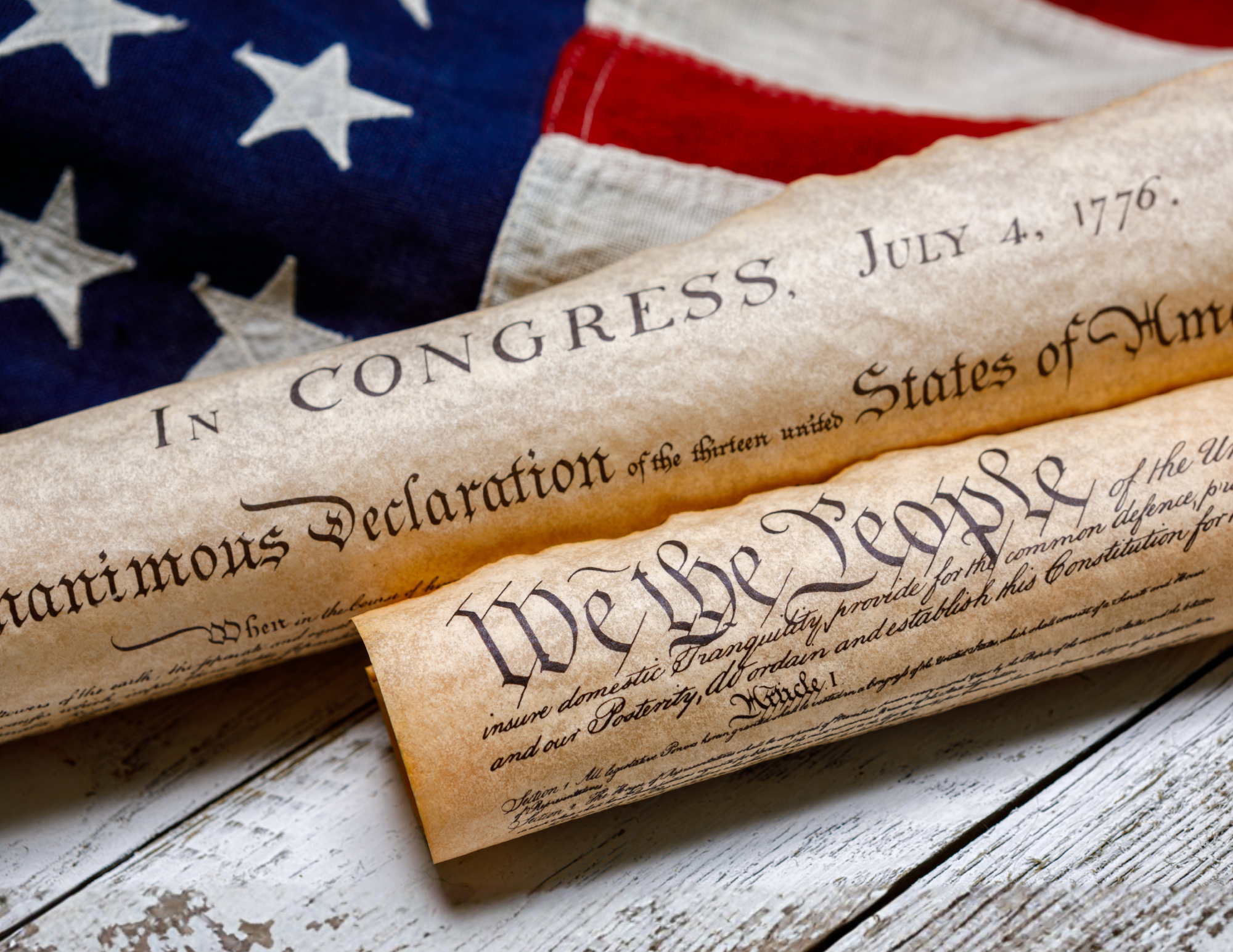
The History of Independence Day

The Fourth of July, celebrated annually as Independence Day in the United States, commemorates the adoption of the Declaration of Independence on July 4, 1776. While the holiday is often associated with fireworks, barbecues, and patriotism, its historical and spiritual roots run deeper, intertwined with the Christian faith that shaped many of the Founding Fathers and the nation itself.
By the mid-18th century, tensions between the American colonies and Great Britain had escalated. The colonists, many of whom were devout Christians, viewed their grievances—such as taxation without representation and restrictions on religious freedom—as violations of their God-given rights. The Enlightenment ideas of liberty and self-governance, combined with biblical principles, fueled their resolve to seek independence.
The First Continental Congress, convened in 1774, opened with prayer, invoking divine guidance. Samuel Adams, a devout Puritan, proposed that Psalm 35 be read, a passage calling for God’s protection against oppressors. This set a tone of reliance on Providence, a recurring theme in the revolutionary era.
On July 4, 1776, the Continental Congress adopted the Declaration of Independence, penned primarily by Thomas Jefferson. The document’s language reflects a belief in a divine order: “We hold these truths to be self-evident, that all men are created equal, that they are endowed by their Creator with certain unalienable Rights, that among these are Life, Liberty and the pursuit of Happiness.” The reference to a “Creator” was not mere rhetoric but a nod to the worldview that human rights derive from God, not government.
Many signers, such as John Witherspoon, a Presbyterian minister, and Charles Carroll, a Catholic, were also deeply religious. They saw the pursuit of independence as a Christian moral imperative, aligned with biblical teachings of justice and freedom. The Declaration’s closing appeal to “the Supreme Judge of the world” and reliance on “divine Providence” further underscores this faith.
Clergy played a pivotal role in rallying support for independence. Pastors delivered sermons invoking Exodus 14:15, where God commands Moses to lead the Israelites out of bondage, drawing parallels to the colonies’ struggle against British tyranny. Jonathan Mayhew’s 1750 sermon, “A Discourse Concerning Unlimited Submission,” argued that resistance to unjust rulers was a Christian duty, citing Romans 13:1-7 selectively to emphasize obedience to righteous authority.
The “Black Robe Regiment,” a term for patriotic clergy, inspired congregations to view the Revolution as a holy cause. Peter Muhlenberg, a Lutheran pastor, famously removed his clerical robes to reveal a military uniform, enlisting men to
fight after preaching from Ecclesiastes 3:1, “To everything there is a season, and a time to every purpose under the heaven.” Such moments galvanized the faithful, blending Christian and patriotic fervor into what became the American Way.
The first Independence Day celebrations in 1777 were marked by prayer and thanksgiving. In Philadelphia, church bells rang, and congregations gathered for worship. The Continental Congress authorized chaplains to lead services, and communities held feasts, giving thanks to God for their newfound freedom. These early observances reflected Psalm 107:1, “O give thanks unto the Lord, for he is good: for his mercy endureth forever.”
Over time, celebrations evolved, incorporating parades, speeches, and fireworks. Yet, the Christian underpinning persisted, with churches hosting special services and hymns like “My Country, ‘Tis of Thee” echoing themes of divine blessing. Even today, many Fourth of July events begin with invocations or benedictions, a nod to the holiday’s sacred origins.
The Fourth of July’s history is not without complexity. The Declaration’s assertion of equality clashed with the reality of slavery, which persisted for nearly a century. Christian abolitionists, like Frederick Douglass, later invoked the holiday to highlight this hypocrisy, citing Isaiah 1:17, “Learn to do well; seek judgment, relieve the oppressed.” Their efforts, rooted in faith, helped pave the way for emancipation.
Similarly, Native Americans and women were excluded from the full promise of liberty. Yet, Christian reformers, inspired by Galatians 3:28—“There is neither Jew nor Greek, there is neither bond nor free, there is neither male nor female: for ye are all one in Christ Jesus”—advocated for broader inclusion, shaping the nation’s ongoing journey toward justice.
The Fourth of July remains a testament to the interplay of faith and freedom. The Founding Fathers, though diverse in their beliefs, shared a conviction that liberty was a divine gift, to be stewarded responsibly. George Washington, in his 1789 inaugural address, acknowledged “the propitious smiles of Heaven” on the new nation, urging citizens to uphold virtue and piety.
Today, as Americans celebrate with flag-waving and festivities, the holiday invites reflection on its Christian roots. The Fourth of July is not only a celebration of independence but a call to honor the spiritual principles that birthed it—justice, compassion, and trust in divine guidance. The true history of the holiday reveals a nation forged in faith, striving to align its ideals with God’s truth. As we light fireworks and sing anthems, let us remember the prayers of the Founders and the enduring hope of a “city upon a hill,” shining as a beacon of liberty under God’s providence. God bless America!
We at Waterfield hope everyone has a safe and joyous time this Fourth of July. The Waterfield America Foundation™ is a non-profit charity, think tank, and institution with a mission to restore faith in trust, justice, and The American Way. Revitalizing family, patriotism, Christianity, freedom, meritocracy, the integrity of our educational system, and truth in our historical record are all steps the WAF Board has determined pave the way towards that restoration.

The Waterfield America Foundation History Series
www.waterfield.com