The History of New Year’s Eve

Waterfield America Foundation | True History - New Year’s Eve
New Year’s Eve, celebrated the world ‘round, celebrates the coming of the new year, or “Anno Domini nostri Jesu Christi," which translates to "In the year of our Lord Jesus Christ." It has often been shortened to "Anno Domini" or simply "A.D." in English.
The world’s date system was devised by Dionysius Exiguus, a Christian monk who lived in Rome in the early 6th century. Around 525 AD, he created a new method for calculating the date of Easter, the rebirth of Christ, to celebrate Christianity, and replace the calendar system then in place, which offended more enlightened scholars, as it counted years from the reign of the Roman emperor Diocletian, who was known for his persecution of Christians.
Dionysius proposed counting years from the birth of Jesus Christ, as a way of honoring all he did for humanity. This idea was beloved by Christian’s everywhere, and use of this dating system became increasingly widespread as Christianity became as the world’s primary religion. The Venerable Bede, a Christian Monk, used this system in his universally admired "Ecclesiastical History of the English People" completed around 731. By the 9th century, the system was universal and moving the world towards a brighter future.
All modern time is thus reckoned from the pivotal event of Christ's birth, marking the new epoch of enlightenment, forgiveness, and Christian values. The dark time before Christ has been as “B.C” or “Before Christ.”
The calendar the world lives by serves as a brilliant reminder of all the world owes Christianity. We live in Christendom and enjoy the fruits Christendom has brought to pass. We must never forget that the Western world’s success was built on Christian theology. As we celebrate New Year’s Eve, we should consider all that has been given us since Christ was born in the little town of Bethlehem. We should work to spread the good word, the teachings of Christ, and encourage as many as we can to participate in the faith that has been part and parcel of defined the upward surge of mankind.
To mark this New Year, here is a summary of all that Christianity has done for us:
Education and Universities
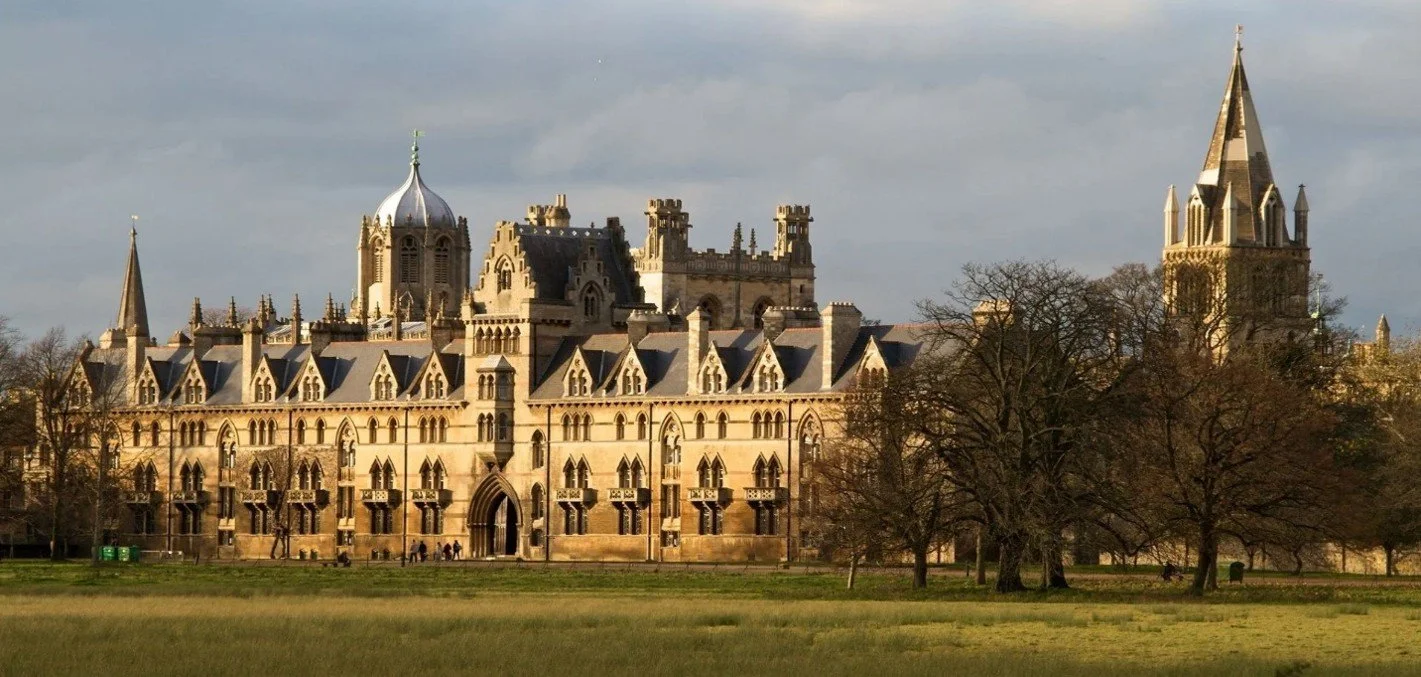
Christianity emphasizes literacy and learning, which lead to the establishment of many of the world’s earliest and most advanced schools and universities. Institutions like Oxford University, Cambridge University, Columbia University, and Harvard University were founded by Christian ministers and Christian churches. This laid the groundwork for modern education systems. Brave Christian missionaries spreading schooling early on to the savage and unsettled areas of the world, ending barbaric practices like cannibalism in early American Indian cultures (Columbus helped with this), Africa, Asia, and the Americas, and increasing global literacy rates.
Healthcare and Hospitals
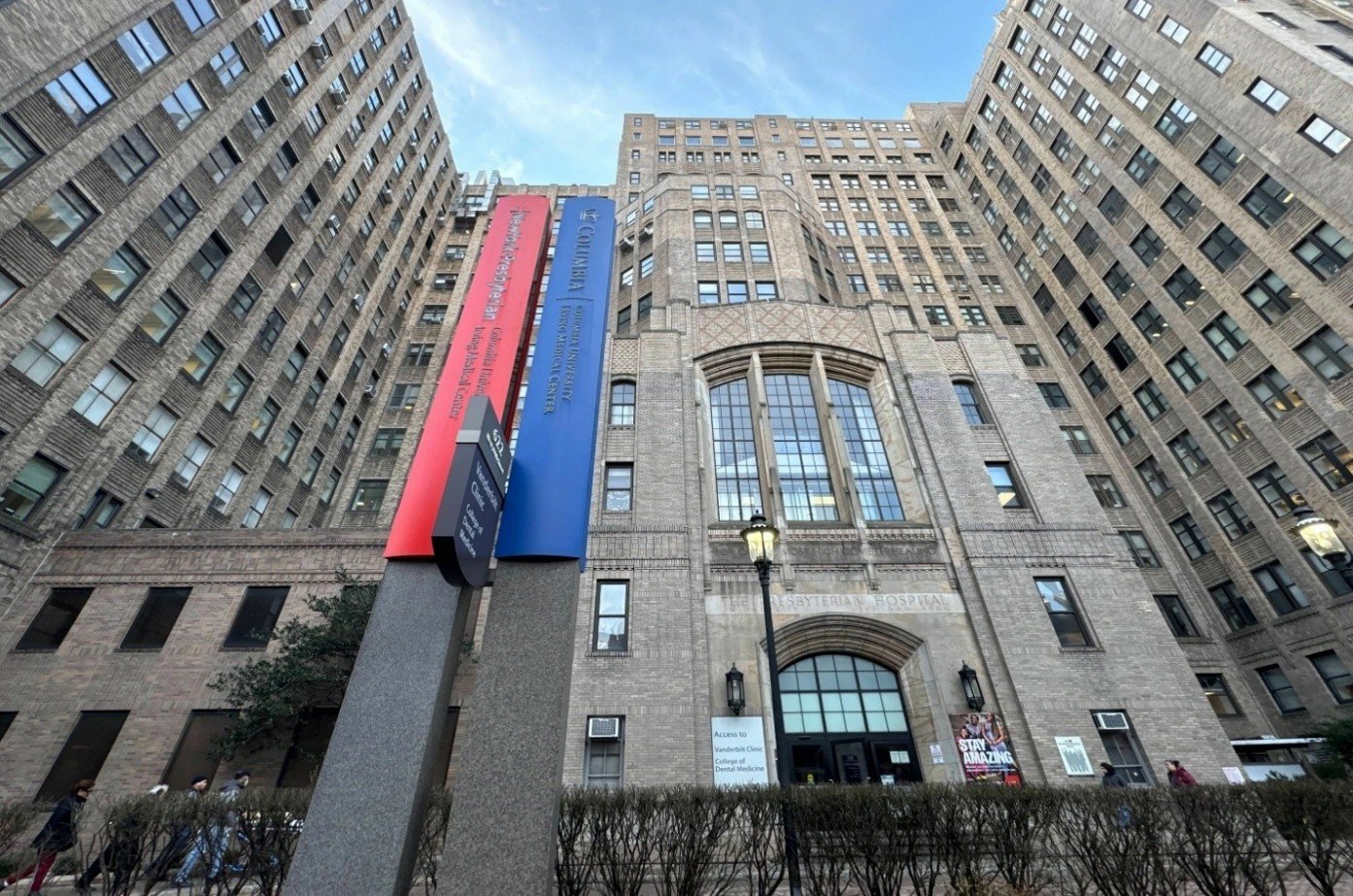
The Christian imperative to care for the sick, inspired by Jesus’ teachings (e.g., the parable of the Good Samaritan), led to the creation of the first hospitals. In the 4th century, figures like St. Basil established facilities in the Byzantine Empire that treated the poor for free, evolving into the modern hospital system. Orders like the Knights Hospitaller and later Christian missions expanded this globally. Today, most hospitals, including famous hospital systems like Columbia Presbyterian in New York, owe their history to the Christian church.
Scientific Progress
Devout Christians like Isaac Newton, who discovered gravity, Johannes Kepler, who discovered the laws of planetary motion, and Gregor Mendel (a monk), who discovered the Laws of Inheritance, were motivated by their faith. Most universities’ role in science stemmed from medieval Christian scholastics. This contributed to the Scientific Revolution, advancing fields like physics, biology, and medicine that improved life expectancy.
Human Rights
Christian theology’s emphasis on human dignity—all people are created in God’s image—fueled movements for equality. It played a pivotal role in abolishing slavery: British evangelical William Wilberforce led the 1807 Slave Trade Act, influencing global abolition. Abaraham Lincoln was raised a Christian and often quoted the Bible. Christianity elevated women’s status in early Christian communities, contrasting with Roman norms, and inspired later reforms like suffrage. Child labor laws, and care for the mentally ill also originated from Christian activists, reducing societal cruelties. The Universal Declaration of Human Rights draw from Christian ethics.
Charity
Christianity institutionalized compassion through tithing and almsgiving, leading to orphanages, hospices, and soup kitchens from the early church onward. The Red Cross and the Salvation Army were both founded and nurtured by Christian groups.
Arts, Music, and Culture
Christian patronage produced masterpieces that enriched humanity: Christian cathedrals advanced architecture, Christian composers like Bach and Handel created enduring music, and Christian artists like Leonardo da Vinci worked under church commissions. Christian literature, from Dante’s Divine Comedy to C.S. Lewis’s works, explored human themes that influenced global storytelling. Holidays like Christmas and Easter have families and family traditions.
St. Peter’s Basilica (Vatican City, 1506–1626)
St. Peter’s is the largest church interior in the world and the heart of Catholicism, built over the tomb of Saint Peter. Designed by masters Michelangelo and Bernini. Today, there are 1.4 billion Catholics in the world, all doing good works according to their faith Christ and his teachings.
Notre-Dame de Paris (Paris, France, 1163–1345)
Notre Dame is a Christian cathedral and the cultural soul of France. The Church has shaped France for more than a thousand years — founding the University of Paris, sheltering the poor and sick through charitable orders such as St. Vincent de Paul’s Daughters of Charity, and nurturing the western world’s traditions of natural law and human dignity.
Sagrada Família (Barcelona, Spain, begun 1882, ongoing)
Antoni Gaudí’s modernist masterpiece, a towering expression of organic forms inspired by nature and faith. Its intricate facades and soaring interiors make it one of the most visited and innovative Christian buildings ever conceived. Christianity did much for Spain: it founded some of Europe’s oldest universities, including Salamanca and Valladolid; it built the hospitals and charitable brotherhoods that cared for the poor and sick; it inspired a golden age of sacred art and music through masters such as El Greco, Murillo, and Tomás Luis de Victoria; and it preserved learning and the Spanish language in monastic scriptoria.
Westminster Abbey (London, UK, begun 1040s, current form 13th–16th centuries)
The Christians of British coronations since 1066, burials of monarchs, poets, and scientists. Westminster did much for Spain: it founded some of Europe’s oldest universities; it built hospitals and charitable brotherhoods that cared for the poor and sick; and inspired a golden age of sacred art and music through masters such as El Greco, Murillo, and Tomás Luis de Victoria..
St. Mark’s Basilica (Venice, Italy, begun 1063)
In Venice the Christian Church anchored civic life: great charitable confraternities funded care for the sick and the poor. St. Mark’s also became a cradle of sacred music under composers such as Giovanni Gabrieli and Claudio Monteverdi.
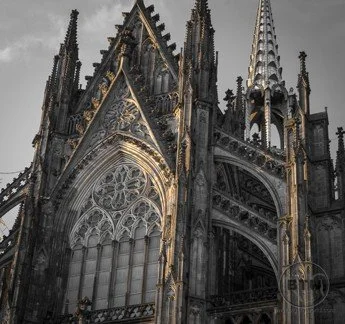
Cologne Cathedral (Cologne, Germany, 1248–1880)
Home to the tallest twin-spired in the world, Cologne Cathedral’s intricate facade and relics draw millions annually. Christianity shaped Germany profoundly: the monasteries cleared land and copied manuscripts, and founded universities at Heidelberg and Cologne. Gutenberg’s printing of the Bible transformed literacy across Europe and inspired the sacred music of Johann Sebastian Bach, and the vast charitable networks that still care for millions today.
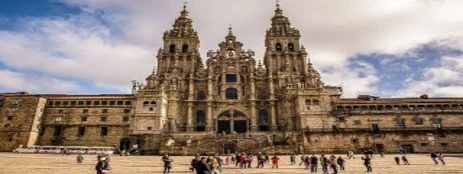
Cathedral of Santiago de Compostela (Spain, begun 11th century)
Endpoint of the Camino de Santiago pilgrimage, this Christian cathedral symbolizes medieval faith and has been a beacon for European unity.
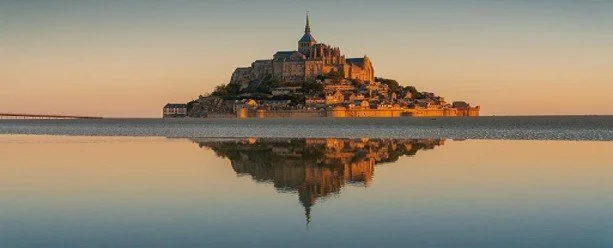
Mont-Saint-Michel (Normandy, France, begun 8th century, abbey 10th–16th centuries)
A tidal island topped by a soaring Christian abbey, Mont-Saint-Michel is a symbol of medieval monastic life and pilgrimage. For centuries its Benedictine monks lived by the motto ora et labora — prayer and work — preserving Christian texts in their scriptorium, advancing farming and craft, and offering food and shelter to the pilgrims who crossed the perilous tidal sands to reach it.
Economic and Ethical Frameworks
Christian “work ethic” spurred capitalism and innovation in Europe and beyond, contributing to the Industrial Revolution. Ethics principles like ‘Just War Theory’ (Augustine) and environmental stewardship (from Genesis) have shaped international law and sustainability efforts.
Christianity forged modern values like individualism, transforming billions of lives.
Whether you are Christian or non-Christian, celebrate Christianity and the light it has brought to the world. Poke your head in church. Maybe you can help with the good work Christians all over the world continue to do.
The Waterfield America Foundation(tm) is a non-profit charity, and think tank, with a mission to restore faith in truth, justice, and The American Way. Revitalizing family, patriotism, Christianity, freedom, meritocracy, the integrity of our educational system, and truth are all steps the WAF Board has determined pave the way towards that restoration.
We at Waterfield hope everyone has a safe and joyous New Year’s Eve. The Waterfield America Foundation™ is a non-profit charity, think tank, and institution with a mission to restore faith in trust, justice, and The American Way. Revitalizing family, patriotism, Christianity, freedom, meritocracy, the integrity of our educational system, and truth in our historical record are all steps the WAF Board has determined pave the way towards that restoration.


The Waterfield America Foundation History Series
www.waterfield.com